Linked IN

Commercial Law Updates

James Sloan


Recent Posts

Fiji's Environment Management Act has been amended with significant changes to the law

Dec 1, 2025 / by James Sloan posted in Environmental Management Act 2005, Environmental Impact Assessments, Fiji Environmental law, Blue Economy, Fiji Planning and Environmental Law, Fiji Blue Economy, Environmental Rule Of Law

The Environment Management (Amendment) Act 2025 was passed by Fiji's Parliament on 1 December 2025.

This legislative overhaul marks a significant step towards modernising Fiji's environmental governance and strengthening the implementation of the Environment Management Act (EMA) 2005.

In a our previous article here we set out the effects of the amendment, and what follows is a brief summary of the key changes and continuities resulting from the Amendment Act.

Read More

Fiji’s Parliament has passed the Forestry Act 2025

Dec 1, 2025 / by James Sloan posted in Fiji land law, Fiji Climate Change Act, Fiji Forestry Policy, Forest Bill 2025, Fiji Forestry Sector, Forestry Act 2025, Fiji Forestry Act 2025

On Monday, 1 December, the Parliament of Fiji passed the Forestry Bill 2025 into law, officially enacting the Forestry Act 2025.

As discussed in our previous update this legislation marks a defining moment for Fiji’s forestry sector. The new Forestry Act 2025 will, when it is brought into force by the Minister, replace the outdated Forest Decree 1992, and ensure alignment between the law and Fiji’s progressive policy landscape, including the Fiji Forest Policy 2007 and the Climate Change Act 2021.

While the Act is now law, the commencement date remains to be confirmed. The Ministry of Forestry will now undertake a structured implementation phase to draft necessary secondary legislation (regulations) and prepare the operational systems required to bring the new framework to life.

Read More

Fiji’s Parliament has introduced the Forestry Bill 2025 that if passed will reform the Forestry sector

Nov 29, 2025 / by James Sloan posted in Fiji land law, Fiji Climate Change Act, Fiji Forestry Policy, Forest Bill 2025, Fiji Forestry Sector, Fiji Forests

 The Government of Fiji, through the Ministry of Forestry, has undertaken a comprehensive review of the legal framework governing the nation’s forest sector. Supported by a technical expert team from the Asian Development Bank (ADB), this intention was to align Fiji’s legislation with its evolving national policies, such as the Climate Change Act 2021, the National Development Plan, and importantly, the Fiji Forest Policy 2007. The result is the Forestry Bill 2025, which will replace the Forest Decree 1992 with legislation that addresses contemporary resource management challenges.

The Forestry Bill 2025 when compared to the legislation it will replace represents a fundamental shift from a regulatory model that focused primarily on timber extraction to one of integrated sustainable management. While the 1992 Decree was instrumental in regulating licensing and royalties, it predated significant developments in ecosystem services, carbon rights, and modern biosecurity. The new Bill addresses these gaps while incorporating the extensive stakeholder consultations regarding the importance of better governance and economic development in the forestry sector.

While the enactment of the Bill is an encouraging first step it is only the initial phase of reform. The successful operationalisation of the new regulatory framework will require a structured implementation strategy to address technical requirements, from the establishment of new governance councils to the training of officers in updated enforcement protocols. This article outlines the technical advancements within the Bill, and evaluates what this shift ultimately means for Fiji.

Read More

Fiji's Environment Management Act: First Major Amendment in 20 Years

Nov 29, 2025 / by James Sloan posted in Environmental Management Act 2005, Environmental Impact Assessments, Fiji Environmental law, Blue Economy, Fiji Planning and Environmental Law, Fiji Blue Economy, Environmental Rule Of Law

The Environment Management Act 2005 (EMA) is the bedrock of Fiji’s environmental law framework. The EMA applies to all of Fiji, including its extensive coastlines, nearshore areas, and ocean areas. This impressive environmental legislation has achieved many things for Fiji, including the introduction of the Polluter Pays Principle and the Precautionary Approach, alongside decision-making tools like mandatory Environmental Impact Assessments (EIAs). There have been notable successes in the enforcement of environmental standards, as demonstrated by landmark court cases upholding its authority against companies that have breached its provisions, that notably include the oil giant TOTAL.

Currently (as of November 2025), the Environment Management (Amendment) Bill 2025 (Bill No. 39 of 2025) is before Parliament. If the Bill is passed by Parliament, this legislation will mark the first major overhaul of the EMA since its introduction, fundamentally reshaping how environmental regulation is administered. This Bill aims to modernise the legal framework, support digitalisation projects, and centralise environmental control under the Ministry of Environment and Climate Change (MECC).

This article briefly sets out what will change if the Bill is passed into law as currently drafted, providing clarity on how the new centralised structure will affect the implementation of the EMA, environmental project approvals, and enforcement actions across Fiji. We also clarify what will remain the same.

Read More

Fiji’s Supreme Court rules against TOTAL (Fiji) for a second time - Environmental Law update

Apr 14, 2024 / by James Sloan posted in Environmental governance, Fiji law, Commercial lawyers Fiji, Fiji Environmental law, Fiji Court of Appeal, Total negligence, Polluter Pays, Fiji Supreme Court, Polluter Pays Principle, Negligence

 On 28 October 2022, the Supreme Court of Fiji confirmed that Total (Fiji) Limited (TOTAL) is liable under Fiji law as a polluter. (CIVIL PETITION NO. CBV 0007 of 2020) (Supreme Court Judgment)

Fiji’s Supreme Court Judges were unanimous in their opinion that TOTAL had been negligent and caused a “pollution incident”. The Supreme Court Judgment upheld the Fiji Court of Appeal’s unanimous Judgment (CIVIL APPEAL NO. ABU 90 OF 2018) that found TOTAL had caused a pollution incident as defined by section 50 of the Environment Management Act, 2005. 

Together, Fiji’s Court of Appeal and Supreme Court Judgments against TOTAL provide significant environmental law jurisprudence for Fiji and demonstrate that the “polluter pays principle” is established in Fiji common law. Amongst other things, the Supreme Court Judgment rejected TOTAL’s interpretation of section 50 of the Environment Management Act, and directed that damages be assessed against TOTAL under 5 separate heads of damages. 

TOTAL did not accept the higher Court Judgments and as a dissatisfied litigant, chose to file an application to challenge the Supreme Court Judgment pursuant to section 98(7) of the Constitution of Fiji. TOTAL’s challenge to the Supreme Court Judgment may be unprecedented in the context of civil litigation in Fiji. 

TOTAL’s challenge was heard by Fiji’s Supreme Court on 13 April 2023, and on 5 April 2024 the Supreme Court by unanimous decision rejected TOTAL’s challenge.

This article provides a summary of the exceptional circumstances under which the final judgment of Fiji’s highest court, the Supreme Court, may be challenged. Any challenge to the Supreme Court must be considered with extreme caution as the dissatisfied litigant challenges the public interest that litigation should reach a final conclusion.


Read More

Landmark Fiji Environmental Law Judgment finds TOTAL negligent and liable for pollution incident, upholding Fiji's Environment Management Act and the principle "Polluter Pays"

Mar 2, 2020 / by James Sloan posted in Environmental Management Act 2005, Fiji land law, The Environment Management Act, Environmental governance, Environmental decision making, Commercial law Fiji, Fiji Environmental law, Fiji Court of Appeal, Fiji Planning and Environmental Law, pollution in Fiji, Total negligence, Fuel leak Fiji

A unanimous decision of Fiji’s Court of Appeal Ramendra Prasad v Total (Fiji) Limited, Civil Appeal No. ABU 90 of 2018, 28 February 2020 (Lecamwasam, JA, Almedia Guneratne, JA, Jameel, JA) has found Total (Fiji) Limited (“TOTAL”) negligent and liable for a fuel leak that was discovered in September 2008 close to Nausori on the island of Viti Levu, in Fiji.

In finding TOTAL negligent, liable and responsible for an underground fuel leak, Fiji’s Court of Appeal has affirmed Fiji’s Environment Management Act, 2005, and the principle “polluter pays” as well as affirming the actions and findings of Fiji’s Department of Environment.

In this legal update we focus on the key legal principles affirmed by the Court of Appeal as they are significant in terms of Fiji’s environmental jurisprudence and good governance.

Read More

Fiji Planning law: Fiji’s government has announced new Town Planning Schemes may be adopted for Suva, Lautoka and Nadi - an opportunity for consultation and good decision making

Jul 1, 2019 / by James Sloan posted in Environmental Management Act 2005, Sovereignty, administrative law, Fiji land law, Torrens title system, The Environment Management Act, Environmental governance, Environmental decision making, Environmental Impact Assessments, Commercial law Fiji, Fiji commercial lawyers, Fiji Planning Law, Town Planning Fiji, Town Planning Schemes Fiji

In common with other common law jurisdictions, Fiji exercises State control over land including but not limited to how it may be developed. The regulation of development falls within the domain of planning and environmental law.

The government has announced that in the public interest it is in the process of updating its Town Planning Schemes for Suva, Lautoka and Nadi. This is an important nation building initiative because a Town Planning Scheme will shape future development in all these cities. But, it is also a significant undertaking that provides an opportunity for, and in our view, requires - wide consultation. If this consultative process is successful it will result in better planned development that along with the effective regulation of environmental standards, is essential to create sustainable and resilient cities and towns for Fiji’s future and its citizens' well-being.

In this update, we take a look at Fiji’s planning law framework and set out various reasons why it is vital for Fiji’s citizens to become involved in the consultation process that is being led by the Ministry for Industry, Trade, Tourism, Local Government, Housing and Community Development to create and adopt new Town Planning Schemes.

The reasons that public involvement is vital include but are not limited to:

  • the significance of Town Planning Schemes to the way planning law and decisions operate in Fiji law
  • the fact that the decisions made pursuant to Town Planning Schemes will have far reaching effects on all citizens, and may affect existing property rights
  • Town Planning Schemes should be suited to Fiji’s context and linked to a shared and bold vision for Fiji’s future.

Each citizen who becomes involved in this consultative process has an opportunity to provide her/his views on how Fiji’s towns and cities should develop to improve but also what aspects of Fiji’s culture and values should be part of that future too.

Read More

Employment Law: The disciplinary Investigation, why it’s important and how to do one properly

Apr 15, 2019 / by James Sloan posted in Fiji employment law, Summary dismissal, Disciplinary process, LAWASIA

Taking disciplinary action against an employee is perhaps the most challenging task for an employer. This is because in most cases of employee wrongdoing the employer must assume the technical roles of investigator, prosecutor and judge while owing an overriding duty to treat the employee fairly. The body of employment law in Fiji shows that employers can pay a high price for getting any of these stages wrong.

In this commercial law update, we consider the first stage of the disciplinary process - being the investigation to establish the facts of the matter. While in Fiji this stage is usually conducted by the employer, in other jurisdictions, like Australia, NZ, and Malaysia, an employer may seek a qualified third party to undertake an investigation.

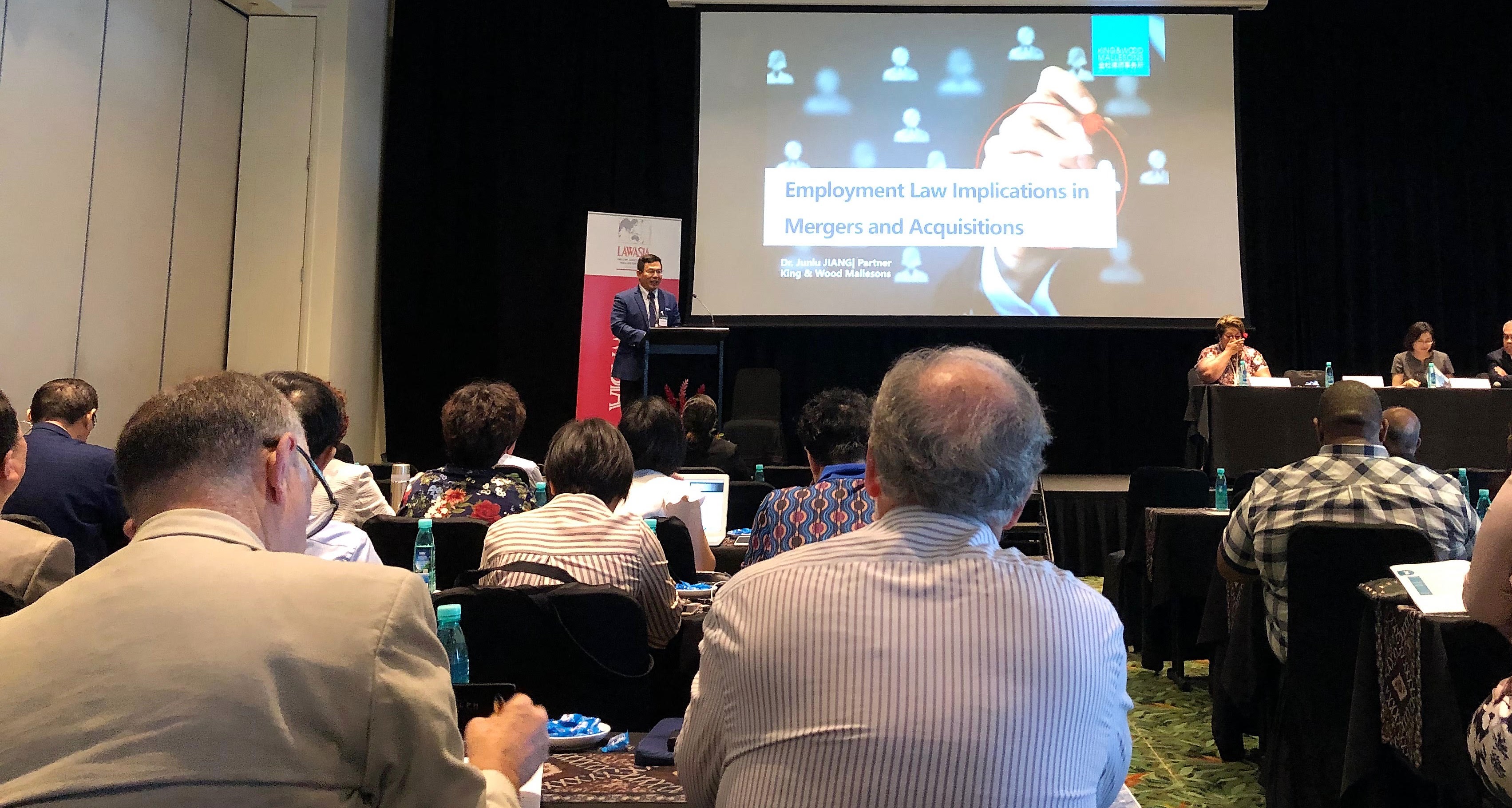
In January 2019, the Fiji Law Society organised and hosted the LawAsia Employment Law Forum during which a senior employment lawyer, Mr Brian C Willamson distilled his many years of expert knowledge into a presentation about how to conduct disciplinary investigations to be “effective and fair”. While, it is likely that most employers due to limited resources and qualified investigators will still have to undertake their own investigations, Mr. Williamson’s detailed and expert knowledge provides valuable insights into this process.

Read More

Migrant workers: legal and other challenges for Fiji and the Pacific

Jan 28, 2019 / by James Sloan posted in International Law, climate change, Fiji employment law, Fiji lawyers, Fiji commercial lawyers, Law of the Sea Convention, Pacific Island Rights, Oceans Governance, Tuna fisheries, Migrant labour Pacific, Migrant labour Fiji, LAWASIA

The movement of migrant workers isn’t so much a global hot topic as a burning one. At the LAWASIA Employment Law Forum, 25-26 January, 2019, the key note presentations aimed to address Migrant Labour Issues: The Rights of Migrant Workers and the Obligations of Employers. An objective of this session was to share among delegates how migrant labour is regulated and what challenges are experienced in various Asia Pacific jurisdictions.

This commercial law update is based on the key note presentation provided to the conference to provide an overview of how migrant labour is regulated in Fiji and the Pacific. Due to time constraints for the key note presentations this update expands on some of the themes discussed during the key note presentation at the conference.

For more information on LAWASIA please see here

Read More

Fiji employment law: When can an employer dismiss an employee for misconduct?

Jan 15, 2018 / by James Sloan posted in Fiji employment law, Dismissal, Summary dismissal, Disciplinary process

Fiji's employment law, like that of other common law jurisdictions, is a mix of statutory rights and common law principles. Fiji's Employment Relations Act, provides every employee with clear minimum standards in relation to conditions like leave, hours of work and minimum contract terms that an employer may exceed but cannot fall below.

However, when it comes to dismissing an employee for misconduct an employer must not only consider the Act but also the employee's contract of employment and what the common law sets out an employer must do to accord the employee with a fair process and decision before the dismissal. In situations of employee misconduct this can be difficult to do as emotions may be running high but the employer must still apply the law and often the best course of conduct is not to rush to a final decision.

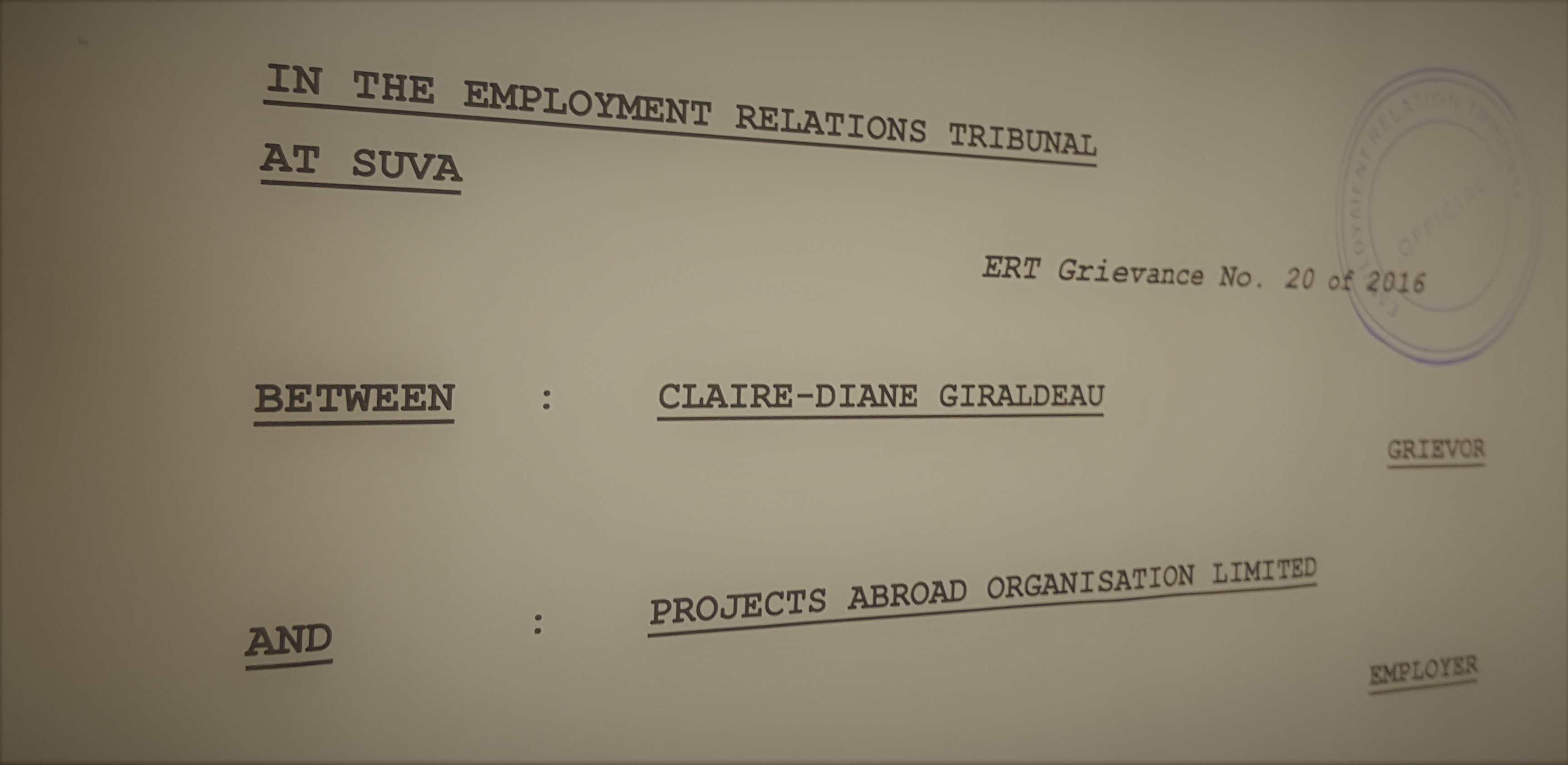
In this update we consider a recent judgment from the Employment Relations Tribunal that sets out the tests that the employer must meet when terminating an employee for cause. A good understanding of these legal tests and what the Employment Relations Tribunal wants in terms of a fair disciplinary process will assist the employer to reach the right decision, as well as minimise legal risk and the chances of an employee being unfairly dismissed.

Read More

Subscribe to Email Updates

Recent Posts

Posts by Topic

see all